Blog
Explore Doug’s revelatory teachings on Biblical truth and the Spirit-filled life.
Christian Living

The Odyssey, Derrida, and Shared Meaning: A brief essay on postmodernism, the power of story, and a hope for the future Christopher Nolan's The Odyssey may end up being remembered for far more than its box office numbers. Yes, it's one of the most ambitious films ever attempted. Nolan reportedly chose to shoot much of the movie on real locations across the Mediterranean rather than relying primarily on green screens and computer-generated worlds. Massive practical sets, authentic landscapes, and IMAX cameras were used to tell a story that has endured for nearly three thousand years. In an age when audiences have grown accustomed to digital spectacle, there seems to be something refreshing—even comforting—about watching something that feels tangible. Perhaps that explains some of the excitement surrounding the film. Or perhaps something deeper is happening. I wonder if our culture is beginning to recover something that has been slowly stripped away over the last sixty years. When We Lost the Story In the 1960s, a French philosopher named Jacques Derrida began advancing ideas that would profoundly shape Western universities, literature, and eventually popular culture. At the heart of his philosophy was the conviction that texts have no fixed meaning. The author's intention is not authoritative; meaning belongs to the reader. Every interpretation is equally valid because there is no final interpretation. But Derrida didn't stop with literature. His broader project became known as "deconstruction." The great stories that civilizations had built themselves upon—what philosophers call metanarratives—were viewed with deep suspicion. Christianity, Western history, objective morality, even the very idea of truth itself were treated as tools of power. According to this way of thinking, overarching stories were not liberating; they were oppressive. So they needed to be dismantled. Notice what is striking about deconstruction: it is extraordinarily good at taking things apart. It is far less interested in putting anything back together. The goal was never to build a better house. The goal was simply to convince everyone the old house had to come down. Humanity Has Always Lived by Story For thousands of years, civilizations have been shaped by shared stories. The Greeks had Homer. The Romans had Virgil. The British had King Arthur. Americans have Washington crossing the Delaware, Lincoln preserving the Union, and the courage of those who stormed Normandy. The Jewish people told and retold the Exodus. Parents sat around tables telling children where they came from, what they believed, who their heroes were, and why those stories mattered. Scripture repeatedly commands Israel to do exactly this. “When your children ask...” tell them. Build memorial stones. Celebrate Passover. Remember. Tell the story again. God understood something modern culture often forgets: People who lose their story eventually lose themselves. Stories Shape Souls Stories do far more than entertain. They define identity. They establish heroes. They communicate virtue. When we lose our stories, we lose our heroes. We lose our identity. We lose our shared values. We lose our morality. Postmodernists didn’t just chisel away at the edges of society. They stole our stories. And when you steal the story, you steal the soul. When those stories disappear, something else inevitably fills the vacuum. Shared values give way to personal preferences. Objective truth gives way to subjective feelings. Identity becomes self-created. Morality becomes negotiable. Everyone does what is right in his own eyes. The results are all around us. Ideas once considered self-evident become endlessly debatable. Biological realities become matters of personal perception. Children are introduced to ideologies before they are old enough to understand them. Increasingly, books, films, and television are not really telling stories at all. They are delivering ideological arguments wrapped inside fictional characters. Why The Odyssey Matters Perhaps that is why the return of The Odyssey feels significant. Not because Homer is Scripture or because ancient Greece had all the answers, but because it reminds us that human beings still hunger for great stories—stories with heroes, sacrifice, courage, and homecomings. Stories that assume there is such a thing as good and evil. Stories that invite us into something larger than ourselves. Perhaps it is evidence that, after decades of deconstructing meaning, people are growing weary of living without one. Tolkien’s Question On the night of September 19, 1931, as J.R.R. Tolkien and Hugo Dyson walked with C.S. Lewis along Addison's Walk at Magdalen College, Oxford, they were discussing story. Lewis loved pagan myths but struggled to believe Christianity because he thought it was “just another myth.” Tolkien challenged that assumption. His question to Lewis was essentially, “What if the stories are true?” Meaning, “What if the pagan myths are echoes pointing to the ultimate truth of Jesus.” True principles leading to the true person. That is what every person has to answer for themselves. Deep down, every person is asking the same questions. Is this story true? Is the hero real? Do I have a place in the story? Can I find my way home? Maybe we are rediscovering what humanity has always known: We were made for story. Not stories that merely entertain us. Stories that tell us who we are. Stories that call us upward. Stories that lead us home. And ultimately, every good story points us toward the greatest story ever told.

Somewhere during Covid, “Stay safe” became our national sign-off. It slowly replaced “goodbye.” I understand the heart behind it. No one wants harm to come to anyone else. But I don’t like the phrase. Not because I want people to get hurt—but because of the subtle mindset underneath it: as if the ultimate goal of life is to stay safe. Let me explain. When God was preparing to deliver Israel from Egypt, there was one final plague—the death angel. Every firstborn in the land would die, except in one place: under the doorpost marked by the blood of the lamb. There was wailing across Egypt.
But under the blood, there was protection. And then God does something surprising. He immediately calls His people out from under the doorpost—the one place of safety—and into the wilderness. Into the Red Sea.
Into Pharaoh’s advancing army.
Into desert terrain.
Into uncertainty about food and water. Why not just stay safe? Because safety was never meant to be found in staying under the doorpost. Safety is found in living under the blood. The blood was not a hiding place.
It was a launching place. There’s a powerful scene in The Lord of the Rings: The Two Towers. King Théoden retreats to Helm’s Deep, believing the fortress walls will keep his people safe. But the enemy overwhelms them. What was meant to be a refuge becomes a trap. Aragorn remembers Gandalf’s words—“Look to the east”—and urges the king to ride out and fight. They charge out from behind the walls just as the light breaks over the hill and reinforcements arrive. The tide turns not while they are hiding, but when they advance. Victory came when they left the walls. Back to Israel. God did not deliver them so they could remain sheltered behind a blood-stained doorway. He delivered them to walk by faith—through seas, deserts, battles, and promises. The protection was real.
But it was protection for a mission. Is God calling you out of what feels familiar? Comfortable? Contained? Stop hiding in a place He never called you to stay. Step into obedience.
Advance into your assignment.
Move toward the promise. You are protected—not because you are playing it safe, but because you live under the blood. The goal of life is not to “stay safe.” The goal is to walk in courageous obedience. And that is far more dangerous—to the enemy—than a life spent hiding.

For the first time in a long while, I didn’t watch much of the game. I wasn’t particularly interested in either team, and the game played out pretty much as I expected—kind of blah. That’s not to take anything away from Seattle. Their defense was smothering, and Sam Darnold deserves real credit. But it was the halftime show that truly grieved my spirit. No, not Bad Bunny. I didn’t watch that one. I had already decided it would promote values and ideologies I don’t believe in or agree with. Instead, I was genuinely excited to click over to YouTube and watch the alternative halftime stream from TP USA. Rewind for a moment to Charlie Kirk’s funeral. I watched nearly all four hours of it, and in many ways it felt like a revival. There was worship. There was a tangible honoring of God’s presence. Person after person unashamedly preached Christ—crucified, resurrected, and the only way to be reconciled to God. Erika Kirk’s extension of forgiveness was one of the most moving, brave, and Christ-like acts I have ever witnessed. For a moment, it felt like America was truly turning. That’s what I was hoping for during TP USA’s halftime show. It wasn’t. At all. Instead, it featured songs celebrating cussing and drinking. Bad Bunny isn’t a picture of what America should aspire to—but neither was this. TP USA, I say this humbly, but I believe you missed a moment. You missed a rare opportunity to bring together worship leaders, testimonies, and bold gospel proclamation. Millions of Americans would have tuned in. Millions could have heard the gospel. But they didn’t. There is a moment in Scripture where Joshua encounters a warrior—the “commander of the Lord’s armies” (very likely a pre-incarnate appearance of Christ). Joshua asks him, “Whose side are you on?” The warrior turns the question back on him: “Whose side are you on?” When leaders stand with God, we must courageously and unashamedly stand with them. Many of the issues we face today are not merely political; they are biblical. And when leaders fail to stand with God, then we must stand with God ourselves. We must return to a holy fear of the Lord—a reverence for His Word, His standards, and His righteousness. Above all, we must always make sure we are found on the Lord’s side.
Theology

Okay, confession time: the title is a little clickbaity. But I also really do mean it. And I think it matters. Here’s why. First off, let’s clarify: the word eschatology is not in the Bible. That’s not necessarily a problem. After all, neither is the word Trinity , and that doctrine is foundational to the Christian faith. And just because Christmas trees don’t appear in Scripture doesn’t mean having one in your living room is wrong. (Unless it’s February. Then it’s very wrong. Take it down. Seriously.) But back to the point — eschatology , as a term, didn’t exist in the vocabulary of early Christians. It wasn’t introduced until around the 17th century , during the rise of post-Reformation theology in Europe. The word gained real traction in the 19th century , especially among Protestant systematic theologians. Again, the problem isn’t the word’s late arrival. The issue is the meaning it carries. Eschatology = “The Study of the End” The word combines: Eschatos = last, final -logy = the study of So, eschatology quite literally means “the study of last things” or “the end times.” But here’s where I push back: Revelation isn’t the end. It’s not a wrap-up or a closing chapter. It’s a re-beginning. It’s Eden restored. The garden becoming a garden-city. The curse removed. Heaven and earth reunited. It’s not the end — it’s the again . And sure, I realize this might sound like a matter of semantics. But let’s not forget: semantics shape theology, and theology shapes how we live. If my framework is built around endings , I live clinging to this world. I fear death. I avoid Revelation because it seems scary and unfamiliar.
But if my theology is rooted in re-beginnings , then I’m filled with hope. I long for a better land. I ache — in the best way — for the ultimate homecoming. A Better Word and a Better Way: Palingenesiology Let me humbly propose an alternative: palingenesiology. It's built on the Greek word παλιγγενεσία (palingenesia), meaning rebirth or regeneration . Palin = again Genesia = birth or genesis It appears in Matthew 19:28 , where Jesus promises “the renewal of all things.” This word captures not just the personal transformation of salvation, but a cosmic one — the full-scale renewal of everything broken. Palingenesiology = the study of new beginnings.
The study of Genesis again .
The study of Eden again . The study of a restored world where Christ is King, the curse is no more, and all things are made new. So Let Me Ask You: Would you rather study a theology of endings that feels fearful and heavy?
Or a theology of re-beginnings that breathes life and hope into every part of your soul? Me?
I’ll take palingenesiology — every time.
Revival

In Acts 19 , we see a striking contrast between the ministry of Paul and the ministry of the Seven Sons of Sceva . Paul walked in true spiritual authority —demons fled, the sick were healed, and Jesus was exalted. The Sons of Sceva, however, while recognized and itinerant in ministry, lacked the substance of power. They had platform , but not presence . They had recognition , but not revelation . They tried to confront darkness, but darkness confronted them. There is a line being drawn today —not just between the world and the church, but between the true church and those who merely perform religion . The difference? Authority. And Jesus tells us how we receive it: “This kind does not go out except by prayer and fasting.” — Matthew 17:21 As Keenan Clark says: “God unlocks things for those who fast that He does not unlock for those who don’t.” Years ago, I read Fasting for Spiritual Breakthrough by Dr. Elmer Towns , based on Isaiah 58 —God’s blueprint for fasting that produces real power. Below is that foundation, expanded and adapted. As you read, ask the Holy Spirit: What are You calling me to fast for? The 12 Biblical Fasts (from Isaiah 58) 1. The Disciple’s Fast – Breaking Bondage & Generational Curses Isaiah 58: “To loose the bonds of wickedness” (v. 6a) “I will feed you with the heritage of Jacob your father” (v. 14c) “You shall raise up the foundations of many generations” (v. 12b) Purpose: Break sin patterns, addictions, and generational strongholds—shifting your spiritual inheritance and blessing future generations. 2. The Ezra Fast – For Guidance and Solutions “To undo the heavy burdens .” (v. 6b) Scripture: Ezra 8:21–23 Purpose: Seek God’s wisdom when facing overwhelming decisions or challenges. 3. The Samuel Fast – For Revival and Awakening “To let the oppressed go free .” (v. 6c) “And your ancient ruins shall be rebuilt… restorer of streets to dwell in .” (v. 12) Purpose: Intercession for the lost and revival in homes, churches, and cities. 4. The Elijah Fast – To Break Fear, Depression, and Discouragement “To undo the straps of the yoke .” (v. 6d) “Then you shall take delight in the Lord .” (v. 14a) Scripture: 1 Kings 19:4–8 Purpose: Replace emotional heaviness with renewed joy and strength. 5. The Widow’s Fast – Releasing Provision through Compassion “To share your bread with the hungry .” (v. 7a) “You shall be like a watered garden , whose waters do not fail.” (v. 11c) Scripture: 1 Kings 17:8–16 Purpose: Generosity in fasting opens supernatural provision. 6. The Saint Paul Fast – Revelation & Calling “And the Lord will guide you continually .” (v. 11a) Scripture: Acts 9:9–19 Purpose: Spiritual clarity, vision, and divine assignment. 7. The Ziklag Fast – To Recover What Was Stolen “And satisfy your soul in scorched places.” (v. 11b) Scripture: 1 Samuel 30 Purpose: Restoration of what the enemy has taken. 8. The Daniel Fast – Health, Healing, and Strength “Your healing shall spring forth speedily.” (v. 8b) “And make your bones strong .” (v. 11c) Scripture: Daniel 1:8–20 Purpose: Renew physical strength and health. 9. The John the Baptist Fast – A Pure and Powerful Witness “Then shall your light break forth like the dawn.” (v. 8a) Scripture: Luke 1:15–17 Purpose: Alignment of lifestyle with calling to influence others for Christ. 10. The Esther Fast – Favor, Influence, and Deliverance “And I will make you ride on the heights of the earth .” (v. 14b) Scripture: Esther 4:16 Purpose: God-given influence to bring deliverance to others. 11. The Daniel Fast (Part 2) – Breaking Territorial Strongholds “To break every yoke .” (v. 6d) Scripture: Daniel 10:12–13 Purpose: Spiritual breakthrough over regions and cities. 12. The Antioch Fast – Multiplying Disciples and Churches Scripture: Acts 13 Purpose: To raise leaders and release kingdom multiplication. Practical Tips for Fasting Plan ahead (calendar + family conversations matter). Write down your purpose— aim gives power. The first 36 hours are often emotionally and physically difficult— push through . Let hunger become worship. Reduce intense physical activity. Use Scripture, prayer, journaling, and silence. A Call to Faith and Action Fasting is not about earning something from God—it’s about making space for Him to move. It is the yielding of our strength so His strength can be revealed. The world does not need: more clever sermons more polished ministries more Christian content The world needs Christians who carry the fire of God. So I ask you: What is God calling you to fast for? Freedom? Healing? Revival? Your children? Your city? Your calling? The invitation is simple: Return to hunger. Return to the altar. Return to power. The same God who answered Paul, Elijah, Esther, and Daniel still answers today . Set your fast. Set your faith. Step in. Breakthrough is near.

The Backstory I recently received communication from a family telling me that they were moving and asking if I would be interested in the husband’s father’s library. Before his passing, he had been a revivalist preacher in Texas and avid book collector. I was absolutely thrilled to be the recipient of this collection. As I took the boxes and boxes of books into my office and opened the first case, I was drawn to a small volume entitled Revival: The Need and Possibilities, and started to read. [1] As I began to read this treatise on revival by British clergyman Cyril C.B. Bardsley, the words began to resonate. Although the words were penned 99 years ago in the U.K., it is though they were written last week in the U.S. I’m not saying I stumbled across the Qumran scrolls or the Holy Grail, but I do believe the Lord in his sovereignty led me to this book and I do believe that its pages contain powerful truths for us today. [4] Our hesitancy with Revival: What exactly am I praying for? I think some of our hesitancy to seek revival is that we’re not sure what we’re seeking. Do we mean a week of “special services”? Do we mean a temporary emotional stirring? Do we mean seeing some strange behavior? If we’re gut-level honest, that’s what some people may have in mind when they think of “revival.” And thus, the (understood) hesitancy to ask God for it. But that’s not what revival is! This small book that I came across has the most complete and powerful definition of revival that I have ever seen. So I want to do two things: First, I will summarize some of the important parts of the first chapter and second, I will include a PDF of the first chapter for you to download and read for yourself. [5] For ease of the flow of thought, I have broken Bardsley's thoughts into headings. The headings are mine, but I have included Bardsley’s words underneath verbatim. I will begin with the foreword written by the Bishop of Liverpool which describes the state of the nation and then proceed to Bardsley’s treatise. The State of Our Nation and Need for Renewal Throughout the world there is distress of nations with perplexity. Men’s hearts are failing them for fear, and for looking after those things which are coming on the earth. All the foundations of human society seem out of course. … [The church] is filled with divine dissatisfaction. They are looking for, longing for, and praying for a revival of true religion. Everywhere the prayer is going up, “Come from the four winds, O breath, and breathe upon these slain that they may live.” The history of Christianity from its earliest days until now unfolds the conditions of a great spiritual awakening. When the dissatisfaction which possesses us has found a voice in more fervent and united prayer and has led us to a deeper penitence and renewed trust in God; when self-surrender takes the place of self-will; and prejudice, and suspicion, and jealousy, are lost in love; when we are ready, like Saul of Tarsus, to ask, with heartfelt submission, “What shall I do, Lord?” then the long looked-for revival will come. God will send a gracious rain upon his inheritance and refresh it when it is weary. There will be “showers of blessing,” and a revived Church will awaken the world (7-9). F.J. Liverpool Bishop of Liverpool March 1916

The body content of your post goes here. To edit this text, click on it and delete this default text and start typing your own or paste your own from a different source.
Prophetic Words
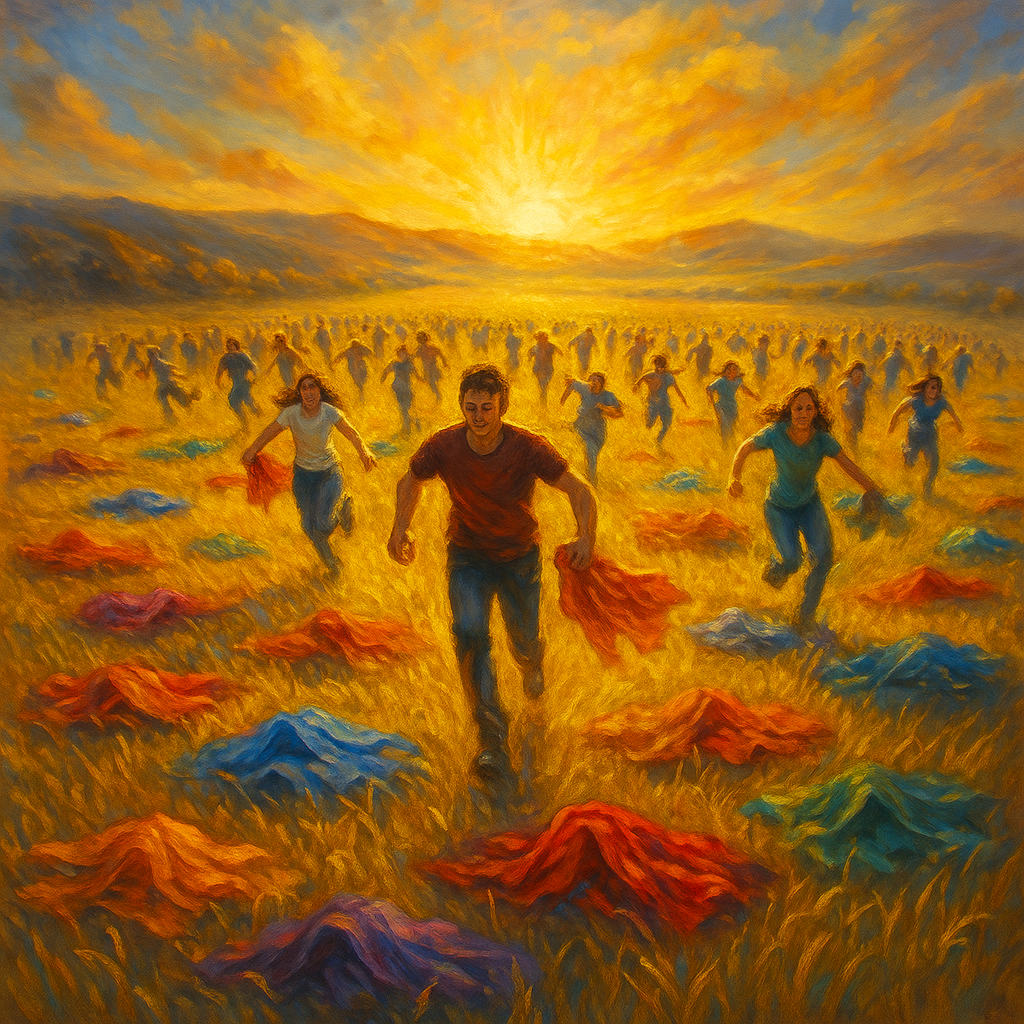
Fallen Mantles

Hiddenness (Part 2): The Spotlight of Heaven is Shifting

What If the Stories Are True?

On the Monday prior to the 2024 Presidential election, our church gathered for a day of prayer and fasting. In the middle of prayer, I saw the number “312”. I had no idea what it meant, but I wrote it down in my journal with a “?” beside it. Then the Lord started sharing with me the rest of what I will share in this blog. A few days later, I realized what the “312” meant. (It was the number of electoral votes President Trump ended up getting.) I believe the Lord showed me that number as a confirmation that I was hearing Him correctly and that I needed to share the rest of what He was telling me. Ephesians 6:12 For we do not wrestle against flesh and blood, but against the rulers, against authorities, against the cosmic powers over this present darkness, against the spiritual forces of evil in the heavenly places. We do not wrestle against personalities, but against principalities. Daniel 10:13 But for twenty-one days the spirit prince of the kingdom of Persia blocked my way. Then Michael, one of the archangels, came to help me, and I left him there with the spirit prince of the kingdom of Persia. Daniel tells us that some of these principalities and strongholds are established over nations, cities, and regions through the vehicle of governmental systems (“Kingdom”) through the leadership of that government (“prince”). The stronghold was in place, in part, because of its alignment with systems that the government invited in, which allowed partnership, and therefore the establishment of the particular principality. Strongholds Are Established Through: Invitation Permission Agreement Patterns Principalities and strongholds can attach themselves to policy. Policy either evokes evil or evicts evil. (“Evoke” means to “invoke a spirit or deity”) For example, policy has invited in and agreed with strongholds of: Abortion Chronic Disease/Healthcare Lawlessness But when laws/policies are changed, they serve as eviction notices for strongholds. But Wait! Before We Celebrate Too Quickly... There is both a great danger and a great opportunity . Luke 11 14 Now Jesus was casting out a demon that was mute. When the demon had gone out, the mute man spoke, and the people marveled. 15 But some of them said, “He casts out demons by Beelzebub, the prince of demons.” When strongholds start to break, not everyone is happy. 17 But Jesus, knowing their thoughts, said to them, “Every kingdom divided against itself is laid waste, and a divided household falls.” When strongholds start to break, it stirs up division . 20 But if it is by the finger of God that I cast out demons, then the kingdom of God has come upon you. When strongholds start to break, it is a sign that God’s kingdom is among us. Now Jesus transitions to a metaphor, but keep in mind the context. The context is demonic activity and strongholds. 21 When a strong man, fully armed, guards his own palace, his goods are safe; 22 but when one stronger than he attacks him and overcomes him, he takes away his armor in which he trusted and divides his spoil. 23 Whoever is not with me is against me, and whoever does not gather with me scatters. 24 When the unclean spirit has gone out of a person, it passes through waterless places seeking rest, and finding none, it says, “I will return to my house from which I came.” 25 And when it comes, it finds the house swept and put in order. 26 Then it goes and brings seven other spirits more evil than itself, and they enter and dwell there. And the last state of the person is worse than the first. Here is the Word to the American Church After the Election: It is not enough for strongholds to be torn down. It is not enough to ‘clean house and restore order.’ When strongholds start to break, our work is JUST BEGINNING! We must put our foot on the gas! What I Believe the Lord is Calling the American Church to Do: Be aware of the enemy’s strategy of division and pursue unity. Establish altars of God’s Presence through prayer and worship. Establish cities of revival and renewal by taking the fire of the altar to the gates (major areas of influence) of the city. Be personally committed to the greatest soul-winning effort of the generation. A Lesson from The Black Widow In the film, The Black Widow, it follows the storyline of Natasha Romanov and her sister, Yelena Belova. Yelena has been under the stronghold of General Dreykov, who has hijacked the minds of young women and formed them into an evil army. As Yelena is exposed to a red dust, it breaks the power of mind control, in a sense setting her “free” from the stronghold. But she is still in a state of hurt, confusion, loneliness, and is desperately searching for connection, family, and purpose. There is something wrong with me. An emptiness. I'm just... drifting. And I don't have purpose. —Yelena Belova Church, this is our greatest threat and greatest opportunity in the coming days. Strongholds are being broken! People will be set “free” from lies of deception and manipulation that they have been under for years. But just because they have been set free doesn’t mean they are saved. This is our opportunity to step in and lead people to JESUS and to finding the life, family, freedom, and purpose that only He can give. These have the potential to be the greatest years of harvest for the church. But if we do not respond, it opens up potential for the enemy to come back in, seven times stronger. The Choice is Ours.
I hear the Lord saying, “I am calling you to attention.”
Holistic Living

What Fasting Does to the Brain — and Why God Designed It That Way Understanding the Divine Intelligence Behind Mental Clarity, Emotional Peace, and Spiritual Sensitivity During Fasting For many Christians, fasting is mainly viewed as a spiritual discipline — something we do to draw near to God, silence distractions, and pursue breakthrough. And while those things are absolutely true, modern neuroscience has uncovered something remarkable: Your brain was designed to function differently — and often better — during fasting.
Not worse. Not weaker.
Better. It turns out that Scripture’s ancient rhythm of fasting lines up perfectly with how God engineered your brain to operate. The spiritual clarity, peace, and sensitivity people often feel during a fast are not imaginary. They are deeply biological — and intentionally designed by God. Let’s explore how fasting affects your brain and why that change matters for your walk with God. 1. Your Brain’s Energy Shift: From Glucose to Ketones Under normal circumstances, your brain runs primarily on glucose , the quick-burning sugar that comes from carbs. But during fasting, glucose becomes scarce, and your liver begins producing ketones — especially beta-hydroxybutyrate. What’s amazing is that ketones are a better fuel for the brain than glucose. They provide: Cleaner-burning energy More ATP per molecule (more power) A steadier energy supply Less oxidative stress Think of glucose like burning firewood — it works, but it’s smoky and inconsistent.
Ketones are like burning natural gas — clean, stable, highly efficient. When your brain receives ketones, you experience: Sharper thinking More stable emotions Better concentration Fewer mental highs and lows It’s no wonder the saints of old fasted when they needed clarity. 2. Ketones Switch On “Brain Superpowers” As ketones rise, they trigger the release of Brain-Derived Neurotrophic Factor (BDNF) — often called “Miracle-Gro for your brain.” BDNF: Protects your brain Grows new neural pathways Strengthens memory Enhances creativity Helps repair damaged areas of the brain During fasting, BDNF can rise as much as 300–400%. This is why fasting often makes you feel: More focused More insightful More creative More emotionally grounded You’re literally thinking with a sharper brain. 3. Fasting Activates Autophagy: The Brain’s Cleanup Mode Autophagy means “self-eating,” but think of it more like “self-cleaning.” In fasting, your neurons begin: Breaking down toxic proteins Clearing old cell debris Repairing weak mitochondrial engines Resetting electrical pathways If you ever feel “foggy,” “scattered,” or “cluttered,” fasting often wipes the slate clean. Even more fascinating:
Autophagy is one of the reasons fasting is protective against neurodegenerative diseases like Alzheimer’s and Parkinson’s. The same “cleaning” that helps your brain spiritually also heals it physically. 4. Fasting Reduces Brain Inflammation One of the biggest enemies of mental clarity is neuroinflammation — microscopic swelling in your brain that messes with mood, focus, and energy. Fasting dramatically reduces this inflammation because: Ketones are anti-inflammatory Blood sugar stabilizes Microglial cells (brain immune cells) calm down What you feel as “peace,” “stillness,” or “clarity” during fasting is not imagined.
It's a neurological reset. This is why fasting is historically paired with prayer — a quieter brain hears God more clearly. 5. Fasting Improves Emotional Regulation and Stress Resilience During fasting, your brain increases GABA , your calming neurotransmitter, and decreases glutamate, your excitatory neurotransmitter. This leads to: Reduced anxiety A calmer emotional baseline Greater resilience to stress More stable reactions Many people say things like: “I felt more patient during my fast.” “I didn’t react as quickly.” “I felt more grounded.” That’s not just spiritual discipline — it’s biochemistry aligning with spiritual direction. 6. Why All This Matters Spiritually You’ve felt it before: When fasting, Scripture seems to come alive. Prayers feel deeper. Worship feels more intimate. Decisions feel clearer. The Holy Spirit feels nearer. Why? Because fasting creates the perfect internal environment for hearing God. ❖ A quieter brain reduces the noise that usually drowns out His voice. ❖ A calmer nervous system allows you to discern gently instead of grasping desperately. ❖ A sharper mind makes Scripture more vivid and revelation more accessible. ❖ A humbled body makes space for the Spirit to lead. This is not coincidence — it is design . God hardwired your biology to support your spirituality. 7. God’s Design: Why Did He Make the Brain Respond This Way? Because fasting is not punishment — it is preparation. Fasting prepares: Your mind to hear Your heart to respond Your spirit to receive Your will to surrender Your emotions to stabilize God created fasting as a pathway to: Breakthrough Clarity Strength Authority Intimacy Renewal It’s woven into both biology and Scripture.
The natural and the supernatural are not separate — they’re two sides of the same masterpiece. Final Thought: The Divine Advantage of an Empty Stomach When you fast, you are not weakening yourself. You are: Sharpening your mind Cleansing your brain Calming your emotions Resetting your body Awakening your spirit You were built for this.
God crafted you to thrive — mentally, physically, emotionally, and spiritually — in the rhythm of fasting. Fasting doesn't just empty your stomach.
It empties your mind of noise, your soul of clutter, and your spirit of distraction… …so God can fill you with His wisdom, His presence, and His power.

How Biblical Fasting Fires on All Four Cylinders of Human Renewal Fasting has often been misunderstood as a fringe, extreme, or archaic practice—something reserved for hyper-spiritual saints or health fanatics. But fasting is actually a timeless and holistic habit woven into the design of the human body, spirit, and psyche. The Bible doesn’t say, “ If you fast,” but rather, “ When you fast” (Matthew 6:16). Perhaps that's because we were created for this ancient rhythm of reset, repair, and reconnection. In this post, we’ll unpack the four dimensions of fasting—the mind, body, soul, and spirit—and discover how abstaining from food can restore us on levels we’ve forgotten we even have. 1. Fasting and the Mind: Mental Clarity & Emotional Reset Your brain is the most energy-demanding organ in your body. When you fast, it gets a rare chance to switch out of constant glucose-fueled processing and tap into a cleaner-burning source— ketones . Mental Benefits of Fasting: Increased clarity and focus Reduced anxiety and mood swings Improved memory and neuroplasticity (your brain’s “flexibility”) Fasting gives your brain a break from the constant churn of digestion and blood sugar regulation. It’s like switching off notifications for hours and finally being able to go deep on that big idea, lingering wound, or God’s whisper you've been too busy to hear. “Be still, and know that I am God.” —Psalm 46:10 Fasting helps you finally find the stillness that leads to true knowing. 2. Fasting and the Body: Cellular Cleanup & Strength Renewal When you stop eating, your body is forced to flip the switch from using quick-access carbs to slow-burning stored fat. But more happens than just fat loss—there’s a biological spring cleaning party happening at the cellular level. Key Physical Benefits: Autophagy: Your cells recycle and remove damaged proteins and toxins. Reduced inflammation and disease risk Stem cell activation (after longer fasts), fostering cellular renewal Lower blood pressure, improved heart health, and better insulin sensitivity It’s no wonder medical researchers are calling fasting a “ miracle therapy in disguise. ” But as Christians, we know the physical is just one part of the story... 3. Fasting and the Soul: Realigning Desires & Breaking Bondage The soul—the place of your emotions , will, and desires —is deeply shaped by habits. And few habits are as powerful (and as sneaky) as your relationship with food. Fasting exposes what really controls us. “Do I really need this, or am I just bored?” “Have I trained myself to believe I can’t function without caffeine?” “Am I eating to satisfy my stomach—or to soothe my soul?” Fasting reveals where comfort has replaced calling, where cravings become chains. But it also gives the soul space to heal, to surrender, and to breathe deeply again. “I beat my body and make it my slave,” Paul says in 1 Corinthians 9:27. Fasting reminds your soul who’s in charge—not your appetite, not your habit— you , in Christ. 4. Fasting and the Spirit: Deep Communion & Divine Power Fasting isn’t just a detox for the body or a reboot for the mind—it’s an accelerator for spiritual intimacy and authority. Spiritual Benefits: Heightened sensitivity to God’s voice Greater dependency on the Holy Spirit Increased power in spiritual warfare Revelation, breakthrough, and clarity in prayer Jesus fasted. Moses fasted. Esther fasted. The early church fasted before sending out leaders and making decisions. Why? Because fasting doesn’t twist God’s arm— it tunes our hearts . Fasting is a declaration: “God, I want You more than anything else—even more than my daily bread.” “This kind does not go out except by prayer and fasting.” —Matthew 17:21 There are levels of spiritual authority you can't reach while feeding your flesh. The Holistic Power of Fasting Fasting isn't just deprivation—it's divine design. It’s where: The mind gets still The body gets clean The soul gets aligned The spirit gets revived Your body heals, your habits weaken, your spirit sharpens, and your purpose rises. All because you emptied yourself to allow God to fill what food never could. Final Encouragement If you're feeling spiritually dull, physically sluggish, or emotionally overstimulated—fasting might be your next step of obedience and breakthrough. We don’t fast to get God’s attention —we fast to give Him ours. Whether it’s a 24-hour fast, a 3-day fast, or a Daniel fast, let your hunger for food be a reminder of your hunger for God. He’s still the Bread of Life—and fasting simply clears the table of distractions so we can feast on Him.

What If the Stories Are True?
Free Devotional:
21-Day Prayer Journey
Discover the joy of freedom, enrich your faith with the fullness of Christ, and learn how to hear God’s voice in your daily life.